Understanding Flood Insurance on Lakefront Property
Many first-time lake buyers assume that living on the water means you’re automatically in a high-risk flood zone. That’s not always the case—especially on Lake Sinclair, where water levels are controlled and regulated rather than tide- or storm-driven.
Unlike oceanfront or riverfront homes, water levels on man-made reservoirs like Lake Sinclair are:
-
managed by Georgia Power, not nature alone
-
more stable year-round
-
less affected by storm surge or tide cycles
-
influenced by dam operations and rainfall patterns
Still, “less risk” does not mean “no risk.”
Flood insurance decisions should be based on data, elevation measurements, and proper mapping—not assumptions.
1. How Flood Zones Work on Lake Sinclair
Flood zones are determined by FEMA Flood Insurance Rate Maps (FIRMs), which classify land based on probability of flooding.
Common Flood Zone Types
| Zone | Meaning | Insurance Requirement |
|---|---|---|
| Zone X (Low Risk) | Outside 100-year floodplain | Usually not required |
| Zone AE (High Risk) | 1% annual flood chance | Required if financed |
| Zone VE (Coastal) | Wave action + surge | Not typical for Lake Sinclair |
| Zone A (General High Risk) | River/lake flooding; limited data | Often required |
Most Lake Sinclair homes—especially on elevated lots—are often Zone X or low-risk classifications, but this varies widely by cove, shoreline grade, and how close the structure sits to the water.
Key takeaway:
Two properties on the same street can have different flood zone classifications.
This is why Traci checks flood maps before clients fall in love with a home.
2. Who Requires Flood Insurance?
Flood insurance requirements depend on three entities:
Your lender
If the property is in a high-risk flood zone, lenders typically require insurance.
Your insurer
Even if insurance is optional, pricing varies by risk level, home elevation, and shoreline proximity.
Your own risk tolerance
Some buyers choose optional coverage in low-risk zones for peace of mind.
Cash buyers
If you’re not using a mortgage, you are not required to carry flood insurance—but Traci still recommends evaluating risk before closing.
3. Does Lake Sinclair’s Water-Level Management Reduce Flood Risk?
Lake Sinclair isn’t controlled by tides—it’s a utility-managed lake regulated by Georgia Power. Water levels rise and fall based on:
-
rainfall
-
power generation
-
dam discharge
-
seasonal lake management
This controlled system helps keep levels more stable than unmanaged lakes or coastal waterfronts.
However, extreme weather can still impact:
-
low-lying seawalls
-
older docks
-
boathouses without elevation buffers
-
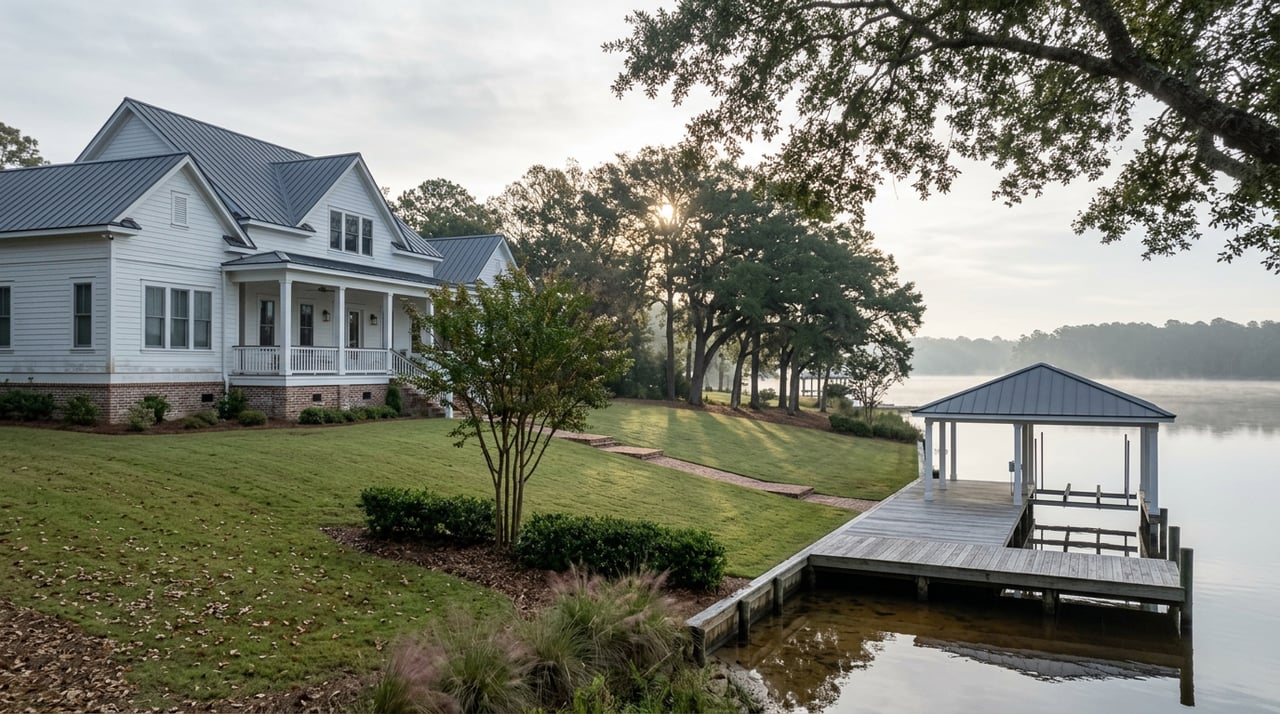
lots built too close to shoreline grade
The house itself may not flood—but shoreline structures may need reinforcement.
This is why Traci evaluates elevation + dock + shoreline together, not separately.
4. What Flood Insurance Covers (and Doesn’t)
Most flood insurance policies cover:
-
structural damage
-
electrical systems
-
flooring and walls
-
appliances
-
HVAC systems
-
foundation issues from flooding
They typically do not cover:
-
shoreline erosion
-
dock damage
-
seawall repair
-
boat lifts
-
landscaping washout
These items may require:
-
separate marine coverage
-
dock insurance
-
homeowners policies with lake-specific add-ons
5. How to Check Flood Zone Status Before Buying
Here’s the process Traci uses for Lake Savvy buyers:
Step 1: Look up the address on FEMA Flood Map Service Center
Search by property location to see flood zone classification.
Step 2: Order an elevation certificate (if needed)
Clarifies base flood elevation relative to the home’s foundation.
Step 3: Evaluate shoreline grade + dock elevation
Flood risk isn't just the house—it's how the shoreline is engineered.
Step 4: Verify past insurance claims (if available)
Previous flood events can affect pricing and eligibility.
Step 5: Compare insurance quotes before writing an offer
Rates can differ significantly depending on structure and elevation.
6. When Flood Insurance Is Most Likely to Be Needed on Lake Sinclair
Flood insurance becomes especially relevant when:
-
the home is built at near-water elevation
-
lots are flat with minimal slope
-
coves experience storm-water runoff
-
shoreline has older retaining walls or no seawall
-
docks sit low to the water
-
homes were built before modern shoreline regulations
A great lot doesn’t just look beautiful—it must also be engineered for long-term water safety.
7. When Flood Insurance Is Rarely Required
Properties are less likely to require coverage when:
-
the house sits higher above the waterline
-
the lot slopes upward from the shore
-
seawalls, rip-rap, and drainage are well engineered
-
the property is in Zone X according to FEMA maps
Some of the most stable, high-elevation lots also carry the highest resale value—because they reduce both insurance risk and maintenance.
Traci helps buyers identify these long-term value features.
8. Cost Considerations for Buyers in 2025
Flood insurance is priced based on:
-
elevation relative to water
-
distance from shoreline
-
construction year and materials
-
prior claims
-
foundation type (crawlspace vs slab vs basement)
Costs may range from a few hundred dollars annually in low-risk areas to several thousand in high-risk or low-lying parcels.
This is why budget planning should include shoreline conditions—not just mortgage numbers.
9. Common Buyer Misconceptions (Lake Savvy Clarifications)
❌ “All lake homes require flood insurance.”
False—many do not.
❌ “If the seller didn’t need insurance, I won’t either.”
Incorrect—insurance depends on lending + zoning + updates.
❌ "Docks are automatically insured by homeowners policies."
Often false—dock insurance may be separate.
❌ “Water view equals flood risk.”
Elevation matters more than proximity.
10. How Traci Nelson Helps Buyers Stay Protected
Traci evaluates flood-risk factors early to help buyers:
-
Compare lots based on elevation and shoreline grade
-
Understand long-term cost differences
-
Verify flood zone classification before due diligence
-
Coordinate with lenders and insurance carriers
-
Avoid low-lying lots with limited resale value
Buying on the water is about lifestyle and smart protection—Traci ensures you get both.
Important Legal Notice (Compliance)
This article provides general information only. Always consult:
-
A licensed insurance agent
-
FEMA flood resources
-
County zoning officials
-
Georgia Power shoreline offices
-
Structural engineers for waterfront builds
Real-estate guidance must also comply with:
-
Fair Housing Act
-
RESPA
-
Georgia Real Estate Commission rules
-
NAR Code of Ethics
Nothing here is legal, engineering, or insurance advice.
Bottom Line: Should You Worry About Flood Insurance on Lake Sinclair?
You can get flood insurance—and sometimes should—but many Lake Sinclair homes will not require it, especially elevated lots with proper shoreline engineering.
To make the right choice, evaluate:
-
flood zone classification
-
water level history
-
shoreline protection
-
home elevation
-
dock and seawall conditions
And do it early—before falling in love with the view.
Contact Lake Savvy Expert Traci Nelson
Ansley Real Estate | Christie’s International Real Estate
Helping buyers evaluate shoreline rules, flood risk, elevation, and long-term lake property value.
Contact Traci Nelson here:
706-818-4168 [email protected]
Lake Sinclair expert | Top agent at Lake Sinclair | #1 trusted local Lake Sinclair Realtor
Traci Nelson is a 5 Star review realtor on Google!
#LakeSinclair #LakeSinclairRealEstate #MadisonGa #MadisonGaRealEstate #GeorgiasLakeCountry #GeorgiaRealtor