Every October for more than thirty years, a two-lane stretch of Highway 83 running through Bostwick filled with tractors. Antique ones, mostly, the kind with steel wheels and a paint job somebody's grandfather kept up. They rolled past the Susie Agnes Hotel, past craft vendors and food trucks parked in a field, past a working cotton gin that still separated fiber from seed the way it had for generations. Thousands of people showed up for a town that most Georgians couldn't find on a map without help. This October, none of that happens. On February 3, 2026, the Bostwick City Council voted to end the Cotton Gin Festival.
If you live anywhere between Madison and Bostwick and you've been wondering why the usual signs haven't gone up along the road this fall, that vote is the answer. But the reason the council gave for ending it says something more interesting than "nobody wanted to do it anymore." The council cited two things: a shrinking pool of volunteers, and the size the gathering had grown to. Read those together and the story isn't decline. It's a mismatch. A festival that started as a modest fundraiser for a handful of Bostwick residents eventually pulled in a crowd that a town this size couldn't keep running on the same volunteer labor that built it.
The Vote Nobody Outside Bostwick Noticed
Bostwick sits about 11 miles north of Madison, small enough that its city government is still the kind where you might know every council member by name. When that council voted in February to end the festival, it wasn't responding to a lack of interest. Attendance was never the problem. The problem was the opposite: an event that had grown into the largest annual gathering in Morgan County was still being run by the same finite group of neighbors who'd been doing it since the 1990s, and that group had gotten smaller while the crowd kept getting bigger. At some point the math stops working, no matter how much people love the tractor parade.
That distinction matters if you live nearby, because it changes what you should expect going forward. A festival that ends because nobody cares tends to have a quiet, permanent death. A festival that ends because it outran its own capacity is a different kind of ending, one tied to a specific operational problem rather than a loss of appetite for the thing itself. Whether Bostwick finds a way to scale the event back down to something a smaller volunteer base can manage, or whether this is simply the last chapter, is genuinely an open question. What's certain is that this fall, for the first time in three decades, there's no cotton gin festival on the Morgan County calendar.
What the Parade Money Was Actually Funding
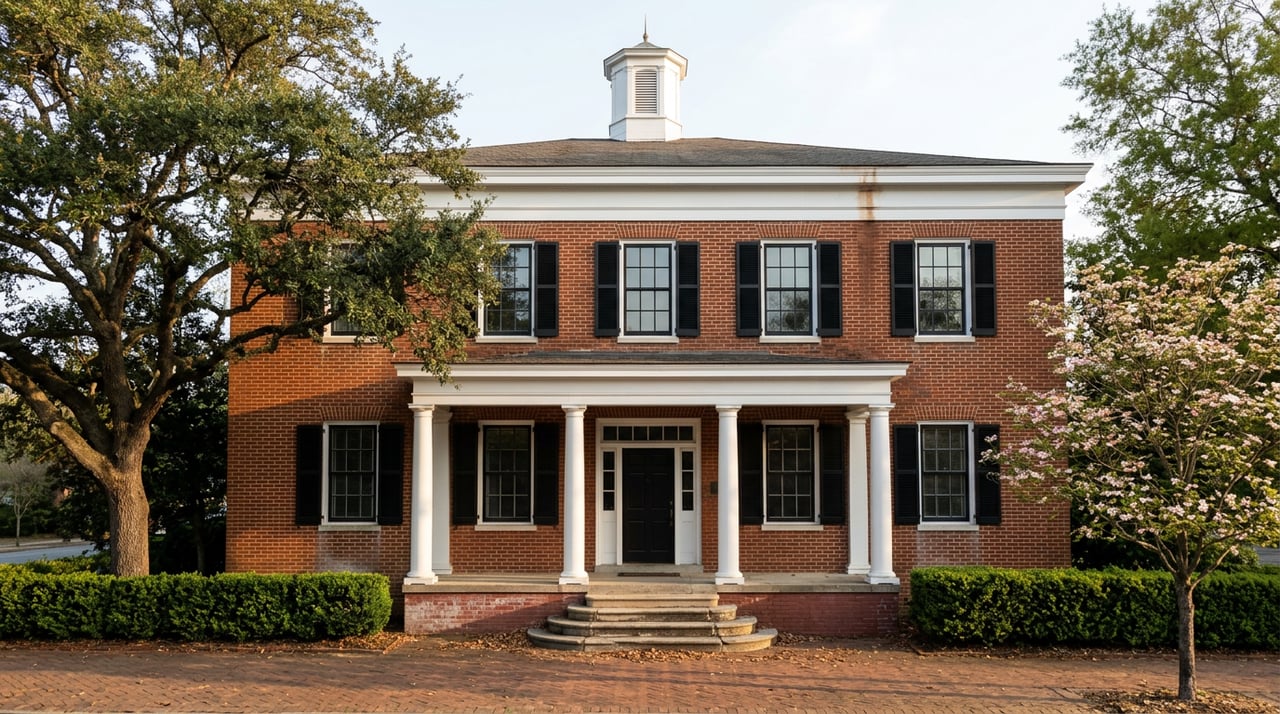
The festival started in 1992, when Bostwick resident June Whittaker organized it as a way to raise money for a specific, tangible goal: saving and restoring the Susie Agnes Hotel, a two-story building John Bostwick Sr. built in 1902 back when the town's economy ran on cotton gins, a seed mill, a depot, and a bank. The hotel eventually became Bostwick's city hall, and every dollar the festival brought in went toward keeping that restoration moving.
Here's the detail that makes the building worth knowing about even if you've never set foot in Bostwick: the Susie Agnes Hotel had a screen credit. It appeared in the 1992 film My Cousin Vinny as the fictional "Parker Hotel." For a town this small, that's not a footnote, it's practically the whole civic identity in one fact, and the festival that funded the building's upkeep for over thirty years was inseparable from that identity.
The first floor of the hotel has been fully renovated and now serves as city hall and a community gathering space. That work got done because thousands of people paid to walk through a tractor parade and buy a funnel cake once a year. Losing the festival doesn't undo the restoration that already happened, but it does remove the mechanism that kept paying for the next phase of it. If you've been inside that building for a town meeting or a community event, you were standing in something the Cotton Gin Festival built.
The Gin Itself Isn't Going Anywhere
It's worth separating two things that get conflated in casual conversation: the festival and the gin. The Cotton Gin Festival is ending. The actual cotton gin is not. Bostwick is still home to one of the few operational cotton gins left in Georgia, and it has been run by five generations of the Ruark family. That's a working piece of agricultural infrastructure, not a museum piece kept around for photo opportunities during festival weekend. The gin doesn't need an October crowd to justify its existence. It ran before the festival existed and it will keep running now that the festival doesn't.
What disappears this fall is the public tour of that gin, the chance to walk through and watch it work while a hayride carries you in from the parking field. The machine that made Bostwick an agricultural town in the first place is still there, still owned by the same family, still doing the same job it always has. The party built around it just isn't happening anymore.
What Still Happens in Bostwick This Year
Bostwick's other long-running tradition is intact. The town still hosts its annual Fourth of July barbecue, sponsored by the Wellington Masonic Lodge and the Bostwick Fire Department, plates sold for ten dollars apiece. It's a smaller, single-day event that doesn't ask the same volunteer commitment the October festival did, and there's no indication the council's decision touches it at all.
There's also a small irony worth noting if you go looking for information on your own. The City of Bostwick's own website still carries the tagline "Home of the Cotton Gin Festival," a leftover from thirty years of the town being known for exactly that. It's the kind of detail that tells you how recent this change actually is. The institutional memory hasn't caught up to the vote yet.
Where the Fall Calendar Still Has You Covered
If the Cotton Gin Festival was your annual marker for the start of fall in this part of Morgan County, you're not entirely without options. Farmview Market runs its Flavors of Fall Festival this time of year, a smaller-scale farmers market event with seasonal treats, handmade crafts, and live music. A few miles the other direction, the town of Rutledge puts on its own Spooky Fall Festival in October, complete with a costume contest and the kind of small-town charm Rutledge leans into on purpose. Neither one replaces thirty years of tractors rolling past the Susie Agnes Hotel, but both are real, currently scheduled events if you're looking for something to put on the calendar in place of what used to be there.
What Bostwick's decision actually illustrates is a limit that a lot of small towns in this part of Georgia run up against eventually. Civic infrastructure here often gets built and maintained through events like this one, run entirely on volunteer time, and that model works right up until the event's own success outpaces the number of people willing to run it. That's not a story about apathy. It's a story about scale, and about how much can quietly ride on a handful of neighbors showing up year after year to organize a parade.
If you're already living in this stretch of Georgia's Lake Country, between Madison's downtown and the smaller towns that ring it, you know this rhythm better than any outsider could explain it. Traci Nelson lives and works in this same territory, from Madison to the shores of Lake Sinclair and Lake Oconee, and writes about the small, specific things that make this part of the state what it is. If you want more of that kind of local read, or you're weighing a move into one of these towns yourself, Traci Nelson is worth a conversation.