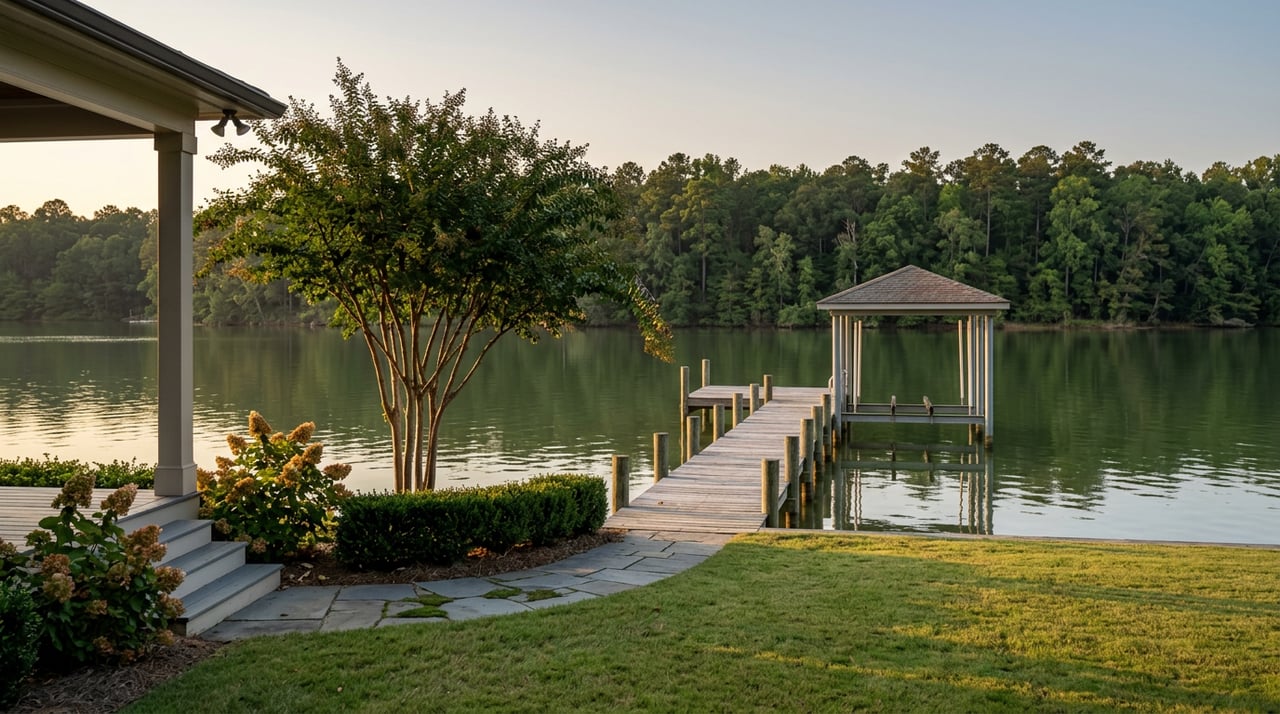
Eyeing a lakefront home near Lake Oconee or Lake Sinclair and wondering if you’ll need a jumbo loan? You’re not alone. Many luxury and second-home purchases in Georgia’s Lake Country cross the line where standard conforming financing no longer applies. If you know what to expect upfront, you can move from offer to closing with fewer surprises.
In this guide, you’ll learn when a loan becomes “jumbo,” how qualification differs from conforming loans, what lake-specific issues can affect your approval and appraisal, and how to choose the right lender in the Madison and Morgan County market. Let’s dive in.
What is a jumbo loan in Lake Country
A jumbo mortgage is any first-lien loan amount that exceeds the conforming loan limit set by the Federal Housing Finance Agency. Conforming limits change each year and vary by county. If your loan amount is above the current limit for the county where the property sits, you are in jumbo territory and your lender will use different underwriting rules.
For Madison buyers, the relevant limit is the one published for Morgan County. If the lake property you’re considering is in a neighboring county, the limit for that specific county applies. Always verify the current year’s conforming loan limit before you assume whether your loan is jumbo.
When your loan becomes jumbo
- The trigger is your loan amount, not the purchase price.
- The county limit determines the cutoff. Properties that straddle county lines use the limit for the address where the property is located.
- Around Lake Oconee and Lake Sinclair, waterfront and custom homes often exceed the conforming limit, so jumbo financing is common for premium lake-view and lakefront purchases.
How jumbo underwriting differs
Jumbo lenders set their own rules, and many keep these loans in portfolio. Expect tighter reviews and a little more paperwork.
- Credit strength: Lenders often look for higher scores, commonly in the 700 to 740 range for best pricing. Approvals can be possible below that with stronger reserves and other compensating factors.
- Down payment and LTV: Maximum loan-to-value is often lower than conforming.
- Primary residence: often 10 to 20 percent down.
- Second home: often 15 to 25 percent down.
- Investment property: often 20 to 30 percent or more down.
- Cash reserves: Expect more months of principal, interest, taxes, and insurance on hand.
- Primary: commonly 2 to 6 months.
- Second home: commonly 6 to 12 months.
- Investment: commonly 6 to 12 months or more, sometimes with extra reserves for other properties you own.
- Debt-to-income: Many jumbo programs allow up to about 43 to 50 percent with strong compensating factors. The exact cap varies by lender.
- Documentation: Full documentation is standard. Plan to provide two years of tax returns, W-2s or 1099s, recent pay stubs, and asset statements. Be ready to explain large deposits.
- Mortgage insurance: PMI is uncommon on jumbos. Most borrowers meet the lender’s down payment threshold instead.
- Rates and fees: Jumbo rates are often slightly higher than conforming, and unique lake properties can carry higher appraisal and title costs. Pricing depends on your credit profile, occupancy type, and the property itself.
Second home vs investment: choose the right path
How you plan to use the property drives your loan options and terms.
- Second home: You plan to occupy it part of the year and not treat it as a primary residence. Lenders want to see you can manage two homes. Terms are usually more favorable than investment financing but stricter than a primary residence.
- Investment property: You intend to rent the home for ongoing income. These loans have higher down payments, higher reserve requirements, and sometimes higher rates. Rental income may help you qualify in some cases, usually with documented leases and a conservative calculation.
- Short-term rentals: Many lenders treat properties used for short-term rentals as investments. Some programs will not allow short-term rental use at all under a second-home classification.
Tip: Decide on your intended use before pre-approval. If short-term rental income is central to your plan, start with investment property financing expectations.
Lake property factors that affect approval and closing
Appraisals on waterfront homes
Unique lake homes do not always have perfect comparable sales. Appraisers may need to reach farther for comps or make larger adjustments for water view, dock access, shoreline type, and lot characteristics. For high-value or nonstandard properties, lenders may request a second appraisal. Be prepared for appraisal gaps, which can require a larger down payment or contract renegotiation.
Flood zones and insurance
Many lakefront parcels fall within mapped flood zones. Your lender will order a flood determination. If the home is in a Special Flood Hazard Area, flood insurance is required. Insurers may ask for an elevation certificate for pricing. Premiums vary, so get quotes early to ensure the home is insurable at a cost that fits your budget.
Septic, wells, and utilities
A large share of lake properties rely on septic systems and private wells. Lenders may require septic and well inspections or proof of permits. Rural considerations like shared road maintenance, access easements, and distance to municipal utilities can influence valuation and eligibility. Order inspections and gather permits early to avoid delays.
Title, docks, and shoreline rights
Docks, boathouses, and shoreline improvements often require permits and can carry title exceptions or easements. Your lender and closing attorney will review these items carefully. Obtain dock permits, surveys, and HOA or lake association rules early, especially if you plan to add or modify waterfront structures.
HOA and association considerations
Many lake communities have homeowners associations or private lake management with dues, covenants, and rental rules. Lenders commonly request HOA questionnaires, dues verification, and estoppel letters. Special assessments or rental restrictions can affect your budget and approval.
Environmental and water-level factors
Shoreline erosion, riparian boundaries, and reservoir-level management can affect long-term value. Ask about any planned infrastructure or shoreline projects and review local rules on stabilization or improvements before you finalize your plans.
Your jumbo loan prep checklist
Getting organized early can save weeks on the timeline.
- Income and employment
- Last 30 days of pay stubs.
- Two years of W-2s and full tax returns. Include 1099s, K-1s, and business returns if applicable.
- Year-to-date profit and loss if you are self-employed.
- Assets and reserves
- Two to three months of statements for all bank and investment accounts.
- Retirement account statements if you will use them to document reserves or proof of funds.
- Gift documentation if a family member is contributing funds. Some jumbo programs limit gifts, so confirm rules with your lender.
- Explanations and supporting documents
- Letters for employment gaps or large deposits.
- Any bankruptcy or foreclosure records if relevant. Waiting periods vary.
- Mortgage statements for other properties you own.
- Property and insurance
- HOA documents and dues statements.
- Recent survey if available and any dock permits.
- Septic and well inspection reports where applicable.
- Homeowners insurance and, if required, flood insurance quotes obtained early.
Timeline note: Jumbo loans often take longer to close than conforming because of more detailed underwriting and complex appraisals. Build in extra time, especially for waterfront homes.
Choosing a lender for Madison and Lake Oconee
Where to look
- Local community banks and credit unions: Often hold loans in portfolio and can be more flexible with unique lake properties.
- Regional mortgage banks and brokers: Can match your profile to multiple jumbo products and lender overlays.
- National lenders with jumbo programs: May offer competitive pricing for very strong profiles.
- Private banks and portfolio lenders: Good fit for high-net-worth borrowers who want customized terms.
Smart questions to ask
- How many lakefront jumbos have you closed in the past year?
- What are your down payment, reserve, and DTI requirements for my occupancy type?
- Will you allow short-term rental use, and will you count rental income for qualification?
- What appraisal approach will you require for a waterfront home? Could a second appraisal be needed?
- Do you require septic or well inspections, and when?
- What is your typical jumbo timeline from application to closing in this area?
Market timing and seasonality
Lake markets can be seasonal, with more listings and buyer activity in spring and early summer. Appraisal and inspection schedules can fill quickly. Start your pre-approval process and vendor bookings early to secure preferred timelines.
A simple step-by-step plan
- Clarify how you will use the home. Decide whether it will be a second home or an investment, especially if you expect short-term rental income.
- Check the current conforming loan limit for the property’s county to see if your target loan will be jumbo.
- Speak with a lender experienced in lakefront jumbos and obtain a written pre-approval that spells out reserve and overlay requirements.
- Shop homeowners and flood insurance early. Confirm insurability and premium estimates before you finalize your offer.
- Line up property-specific inspections such as septic, well, and survey, and gather dock permits and HOA documents.
- Prepare for appraisal. Share any relevant comps or upgrades with your agent and lender to support valuation.
- Build a timeline buffer. Allow extra time for underwriting questions and potential appraisal or inspection follow-ups.
Buying a waterfront or luxury home in Georgia’s Lake Country is about more than square footage. It is about the life you want on the water. With the right jumbo strategy, you can protect your purchase and enjoy a smoother path to the closing table. If you are considering Madison, Morgan County, Lake Oconee, or Lake Sinclair, connect with a local expert who can guide you from pre-approval to keys in hand. Reach out to Traci Nelson to talk through your plans and next steps.
FAQs
How much down payment do jumbo lenders expect for a Lake Oconee second home?
- Many second-home jumbos require about 15 to 20 percent down, with some lenders asking for more based on credit, reserves, and overall profile.
How do docks and boathouses affect a jumbo loan on a lakefront home?
- Waterfront improvements factor into appraisal, insurance, permits, and title. Lenders may require documentation of permits and clear title to proceed.
Can I use short-term rental income to qualify for a jumbo loan on a lake property?
- Often not for a second-home classification. Many lenders treat short-term rentals as investment use with stricter terms and limited income credit.
Are jumbo mortgage rates higher than conforming rates in this area?
- Jumbo rates are often slightly higher, but pricing depends on your credit, reserves, occupancy type, and lender program.
Will I be required to carry flood insurance for a lakefront jumbo loan?
- If a flood determination places the property in a Special Flood Hazard Area, flood insurance is required. Getting quotes early is wise even if not required.
Do jumbo loans take longer to close on lake homes around Madison?
- Yes, they often take longer due to detailed underwriting, complex appraisals, and property-specific inspections. Build in extra time for closing.